

Quiz Summary
0 of 34 Questions completed
Questions:
Information
You have already completed the quiz before. Hence you can not start it again.
Quiz is loading…
You must sign in or sign up to start the quiz.
You must first complete the following:
Results
Results
0 of 34 Questions answered correctly
Your time:
Time has elapsed
You have reached 0 of 0 point(s), (0)
Earned Point(s): 0 of 0, (0)
0 Essay(s) Pending (Possible Point(s): 0)
Categories
- Not categorized 0%
- 1
- 2
- 3
- 4
- 5
- 6
- 7
- 8
- 9
- 10
- 11
- 12
- 13
- 14
- 15
- 16
- 17
- 18
- 19
- 20
- 21
- 22
- 23
- 24
- 25
- 26
- 27
- 28
- 29
- 30
- 31
- 32
- 33
- 34
- Current
- Review
- Answered
- Correct
- Incorrect
-
Question 1 of 34
1. Question
Your patient has just been brought back to their room after having a cardiac cauterization. Upon assessing your patient, you notice that their toes are colder on the side where the catheter was inserted. You are also unable to find a pedal pulse with the Doppler. Which of the following actions should you do first?
-
Question 2 of 34
2. Question
Your patient has just been brought back to their room after having a cardiac catheterization. Upon assessing your patient, you notice that their toes are colder on the side where the catheter was inserted. You are also unable to find a pedal pulse with the Doppler. Which of the following actions should you do first?
-
Question 3 of 34
3. Question
0.12 seconds is equal to;
-
Question 4 of 34
4. Question
Electrical conduction in the heart begins with which of the following?
-
Question 5 of 34
5. Question
Electrical conduction in the heart begins with which of the following?
-
Question 6 of 34
6. Question
A sugically implanted electronic device that helps regulate the heartbeat.
-
Question 7 of 34
7. Question
An opening between the left and right atria (the upper chambers) of the heart. Everyone has a PFO before birth, but in 1 out of every 3 or 4 people, the opening does not close naturally, as it should, after birth.
-
Question 8 of 34
8. Question
A ventricular rate is determined by….
-
Question 9 of 34
9. Question
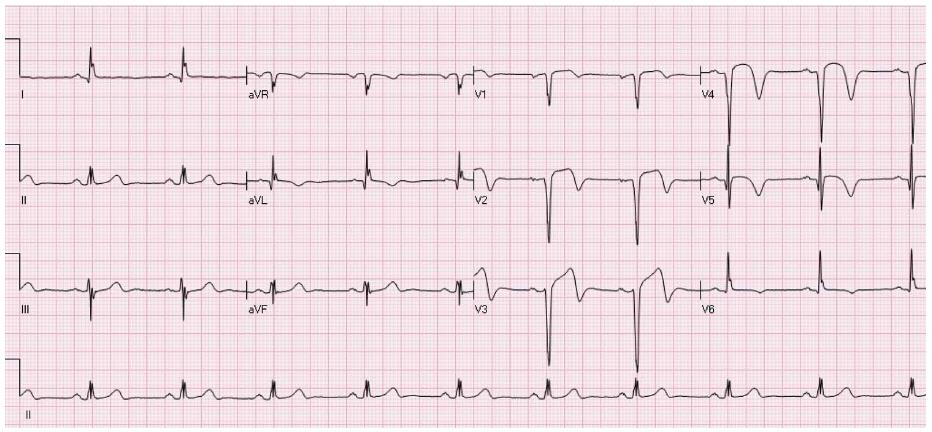
-
Question 10 of 34
10. Question
 Name that rhythm
 -
Question 11 of 34
11. Question
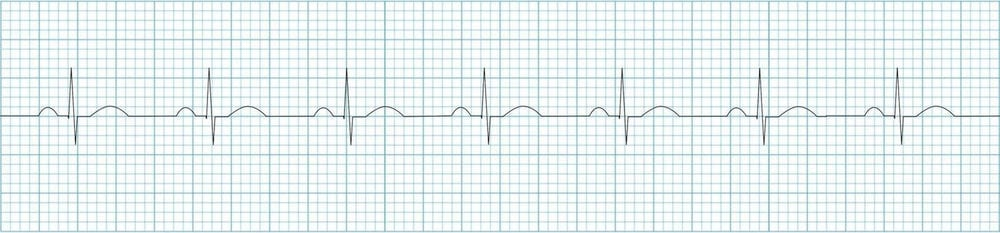
-
Question 12 of 34
12. Question

-
Question 13 of 34
13. Question

-
Question 14 of 34
14. Question

-
Question 15 of 34
15. Question
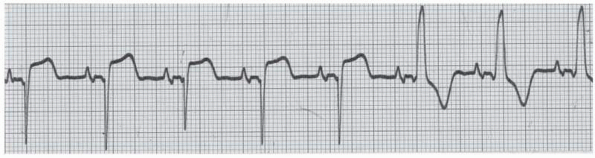
-
Question 16 of 34
16. Question
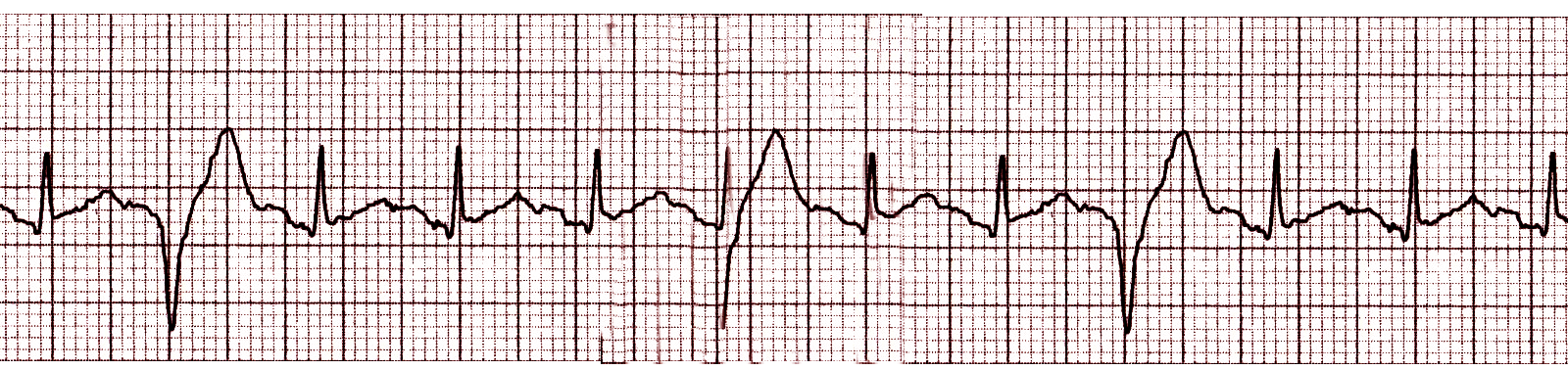
-
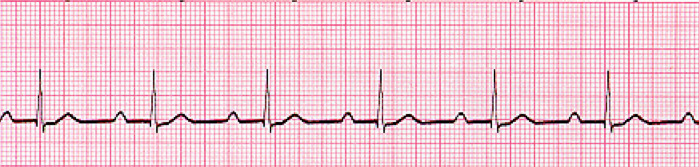
Question 17 of 34
17. Question
-
Question 18 of 34
18. Question

-
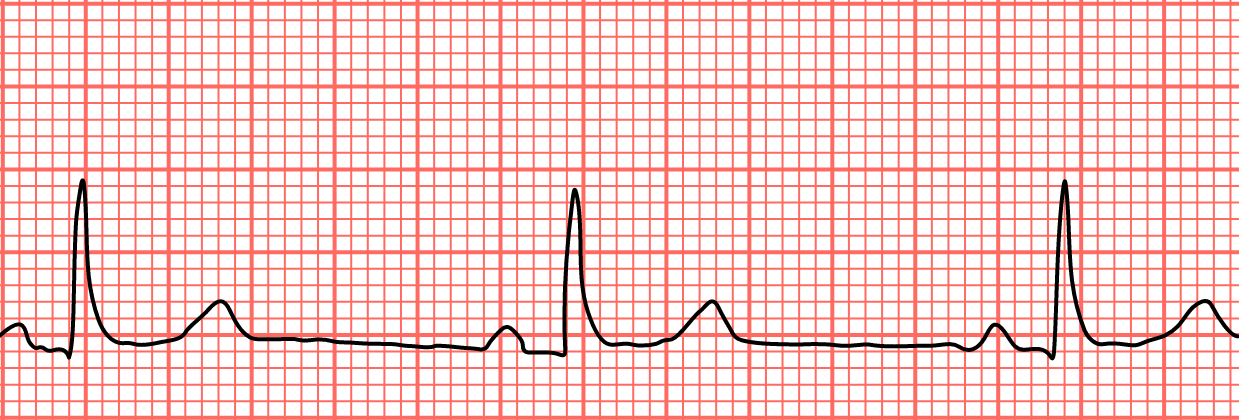
Question 19 of 34
19. Question
-
Question 20 of 34
20. Question
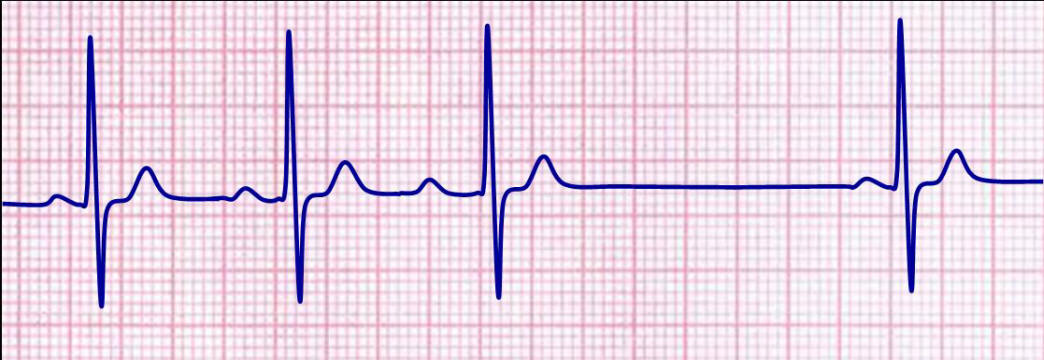
-
Question 21 of 34
21. Question

-
Question 22 of 34
22. Question

-
Question 23 of 34
23. Question

-
Question 24 of 34
24. Question

-
Question 25 of 34
25. Question

-
Question 26 of 34
26. Question

-
Question 27 of 34
27. Question

-
Question 28 of 34
28. Question

-
Question 29 of 34
29. Question
A 12 lead ECG indicates that you will attach twelve leads to the patient.
-
Question 30 of 34
30. Question
The normal ejection fraction of the heart is approximately _____________________
-
Question 31 of 34
31. Question
during auscultation, the first heart sound is that of………
-
Question 32 of 34
32. Question
Which of the following medications can lower the heart rate?
-
Question 33 of 34
33. Question
When performing CPR it is important to make sure that the depth your compressions are at least ____________ the volume of the chest.
-
Question 34 of 34
34. Question
Your patient complains of chest pain. They state that they feel as if an elephant is sitting on their chest. Their heart rate is 73 beats per minute. What is your first action?