

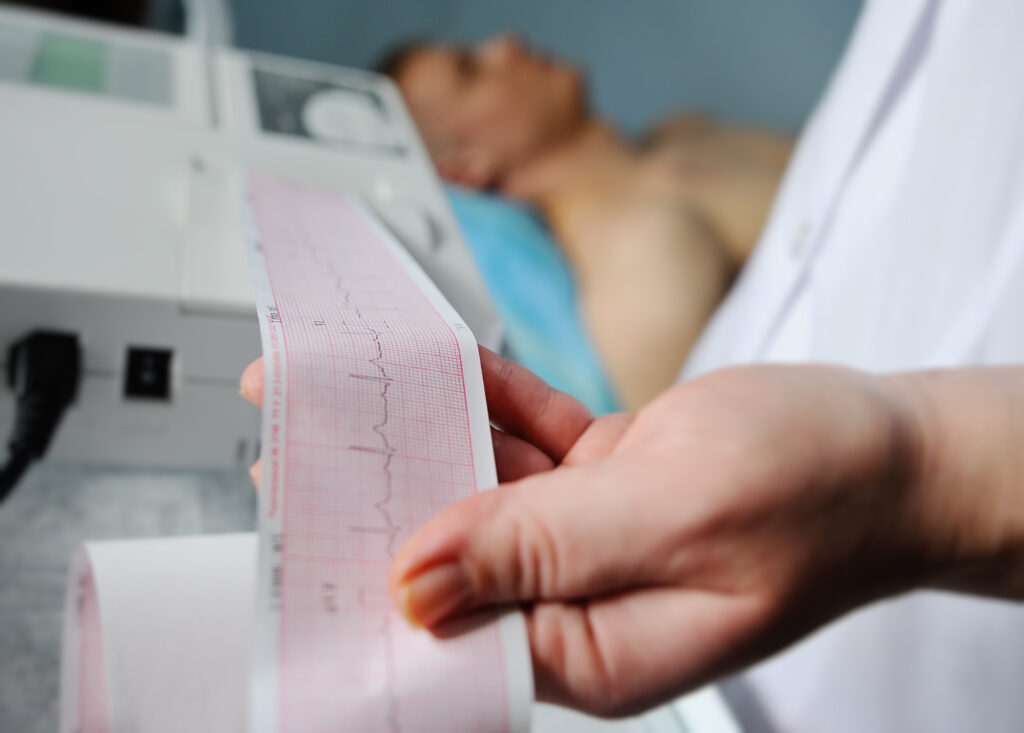
A telemetry technician is a professional who provides assistance and monitoring support in a medical setting with a specific focus on monitoring heart rhythms. This is often done using electrocardiographic equipment, more commonly known as ECGs. The device itself is a common, non-invasive test that detects abnormalities in heart rhythms, allowing doctors to provide appropriate treatment. A telemetry technician is the professional that completes these tests.
For those with proper skills, it is possible to find telemetry technician jobs in Alabama, but most locations require certification.
Telemetry Technician Jobs Alabama
Telemetry technician jobs in Alabama may be available through numerous medical facilities. These technicians work in hospitals, medical centers, labs, and even in some traveling, mobile services. Any location that monitors heart conditions either for a one-time detection or for ongoing monitoring while in the hospital could be an ideal location for employment.
You may find telemetry technician jobs in Alabama at locations such as:
- University of Alabama Hospital
- Lakeland Community Hospital
- East Alabama Medical Center
- Ascension St. Vincent’s Birmingham
- Baptist Medical Center
- BayPointe Hospital
- Decatur Morgan Hospital
- Encompass Health Rehabilitation Hospital of Montgomery
With over 120 hospitals located throughout Alabama, it is possible to find telemetry technician jobs at any of these locations. These professionals may work in:
- Inpatient services
- Emergency rooms
- Cardiologist specialist offices
- Onsite labs
- ICUs
In addition to working in actual hospitals, there are many outpatient appointments that require the use of telemetry technicians. For example, any cardiologist department in a medical center may have a need for those with this skill. Some examples could include the following:
- Brookwood Baptist Medical Center
- Birmingham Heart Center
- Grandview Medical Center
- Gadsden Regional Medical Center
- Southeast Health Medical Center
- DCH Regional Medical Center
Though it is less common, it may also be possible to find telemetry technician jobs in some doctor’s offices. Larger, stand-alone emergency rooms and urgent centers may also need these technicians to provide specific care as patients come in.
What Is Work as a Telemetry Technician Like?
The most common role a telemetry technician plays is working in a hospital or other inpatient treatment facility. Their job typically allows for the placement of electrodes on the chest of patients that are then connected to in-room equipment to monitor a person’s heartbeat over a period of time, sometimes for their whole stay.
These devices are then linked to a central location, such as at the nurse’s desk, where technicians are stationed. If there is any concern, such as a very fast or otherwise irregular heartbeat that could be dangerous, it can be detected quickly and acted upon by nurses and doctors on staff. The technician’s job is typically to:
- Set up ECGs on patients in hospital settings
- Set up the monitoring process for the patient with the technology
- Monitor for any alerts
- Support help in getting to the patient if there is a need
Telemetry can be used just in a patient’s room, or newer systems are also designed to provide more flexibility to the individual, allowing them to go to rehab or other locations on the grounds. In this case, the telemetry technician will carefully monitor those activities and alert professionals if there is a concern.
Some of the most modern solutions allow patients to be fitted with the telemetry device and then go home with it. It provides an external monitor that may be linked to a Wi-Fi connection to download reports to the doctor. Others are monitored over a period of time with the data stored in a memory. Then the technician will download that information, create a report, and send it to the appropriate doctor.
Telemetry Technician Job Outlook in Alabama
There is an ongoing need for telemetry technicians in many hospitals throughout Alabama. As the population ages, it is more important than ever for these professionals to meet the ongoing needs of patients.
The Bureau of Labor Statistics (BLS) indicates 1290 worked as a cardiovascular technologist or technician in May 2021 in the state of Alabama. In addition to this, it reports that they earned an annual mean wage of $46,500. That is a mean hourly wage of $22.36. By comparison, on a national level, the mean annual wage was $62,020 or $29.82 per hour.
More on the Telemetry Technician Job Outlook
Looking long term, having a career as a telemetry technician could be promising and in demand. By 2024, the number of people working in this field is likely to grow by 24%. In Alabama, the BLS states the area could see a 10% increase in the demand for qualified professionals in this field by 2031. That is an increase of 14,700 across all of the US.
How to Become a Telemetry Technician
The key term there is qualified. To work in this field, individuals must have some level of training. To become a telemetry technician in Alabama, individuals must complete the necessary education and training and earn a certification from an accredited organization. You do not need a college degree, but you do need proper training to learn how to use this equipment and how to manage patient care.
This type of training and education is provided by the National Telemetry Association. The educational path can fit into a busy life since it is a self-paced program. It can be completed in a matter of weeks, allowing individuals to qualify for these positions within just a few months.
Should You Look for Telemetry Technician Jobs in Alabama?
With a strong ability to build a career that is in demand, for many, telemetry technician jobs in Alabama can prove to be very valuable. With a strong telemetry technician job outlook in Alabama and across the country, it is likely you will be able to find a job in a wide range of settings.
If you enjoy working with people, supporting the needs of doctors and nurses, and want to make a difference in an often critical situation, this could be the type of job for your needs.